
Keynote Speakers
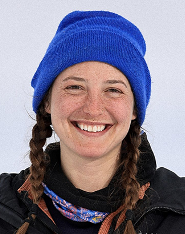
Allie Balter-Kennedy, Department of Earth and Climate Sciences,Tufts University, USA.
Below the ice core: direct evidence of past ice-sheet retreat from subglacial archives.
Dr. Allie Balter-Kennedy obtained her PhD in 2023 from the Lamont-Doherty Earth Observatory of Columbia University, and since 2025 has been an Assistant Professor in the Department of Earth and Climate Sciences at Tufts University. She is a glacial geologist and geochemist who uses cosmogenic-nuclide exposure dating to reconstruct past ice sheet extent and subglacial processes, with fieldwork spanning Antarctica, Greenland, and other remote sites. Her work helps scientists understand how ice sheets have responded to past warming and what that means for future sea-level rise. Her research on the Greenland ice sheet has been featured in outlets including the Washington Post and Scientific American. She now leads the Tufts Cosmo Lab, where she continues this work with postdocs and undergraduate researchers.
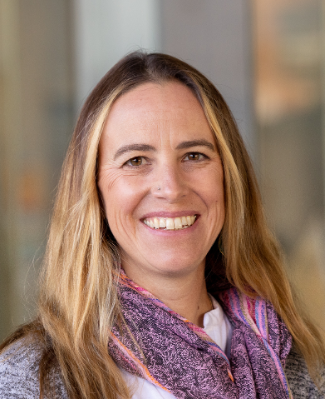
Jessica E. Tierney, Department of Geosciences, University of Arizona, USA
Interpreting past climates through the lens of ice.
Dr. Jessica E. Tierney received her PhD in geology from Brown University, and is currently a Professor of Geosciences and the Thomas R. Brown Distinguished Chair in Integrative Science at the University of Arizona. She built her early reputation using geochemical proxies in marine sediments (such as the TEX86 method) to reconstruct past climate in East Africa and the Indian Ocean region. More recently, she has become a leading figure in paleoclimate data assimilation, combining proxy records with climate models to produce full-field reconstructions of past global temperature. Her honors include being a Packard Foundation Fellow, an American Geophysical Union Fellow, a lead author on the IPCC Sixth Assessment Report, and the first climatologist to win the NSF's Alan T. Waterman Award since its inception in 1975.
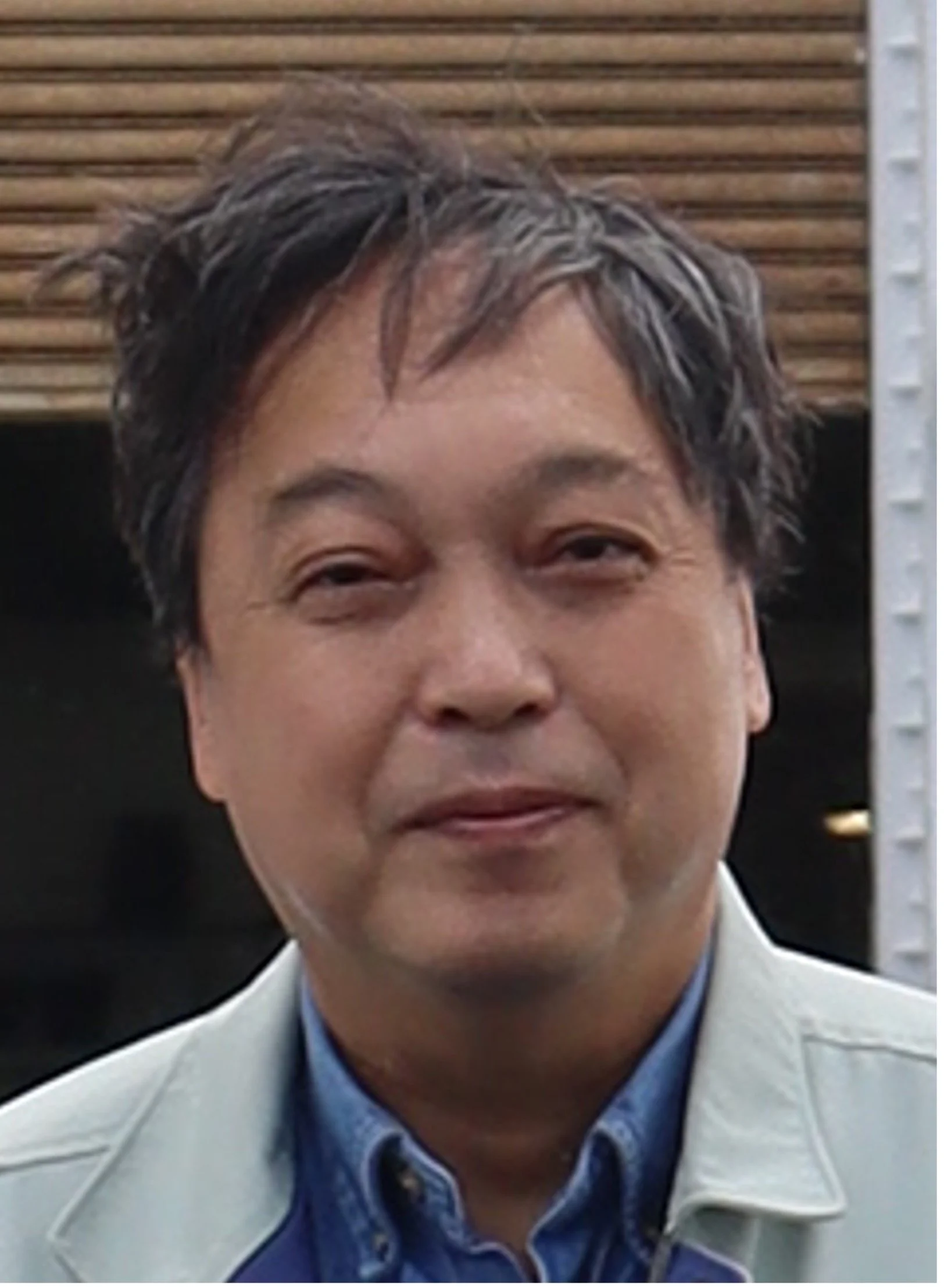
Masanobu Yamamoto, Faculty of Environmental Earth Science, Hokkaido University, Japan
A Pleistocene CO2 proxy record: The ocean’s breath in harmony with ice sheet fluctuations
Dr. Masanobu Yamamoto received his PhD from Nagoya University in 1995, and since 2019 has worked as a professor at the Faculty of Environmental Earth Science at Hokkaido University. His research centers on organic geochemistry, paleoceanography, and paleoclimatology, using molecular biomarkers (such as alkenones, GDGTs, and the Arctic sea-ice proxy IP25) to reconstruct past sea surface temperatures, ocean circulation, and climate variability. His work spans across a wide range of settings, from the Arctic and North Pacific to the equatorial Pacific and Hokkaido's own peatlands and lake sediments. More recently, his work has used leaf-wax carbon isotopes from Bay of Bengal sediments to reconstruct atmospheric CO2 over the past 1.5 million years and beyond. He has received several honors for this work, including the Japan Society of Organic Geochemistry's Academic Award (2016) and a paper award from the Geological Society of Japan (2019).
Special Collection
We’re excited to announce that papers from IPICS 2026 will be eligible for submission to a joint special issue of Climate of the Past and The Cryosphere, emerging from the IPICS Fourth Open Science Conference.
All conference participants are welcome to submit original research presented at IPICS 2026 for peer-reviewed publication. More details on submission deadlines and guidelines will be provided closer to the conference.